
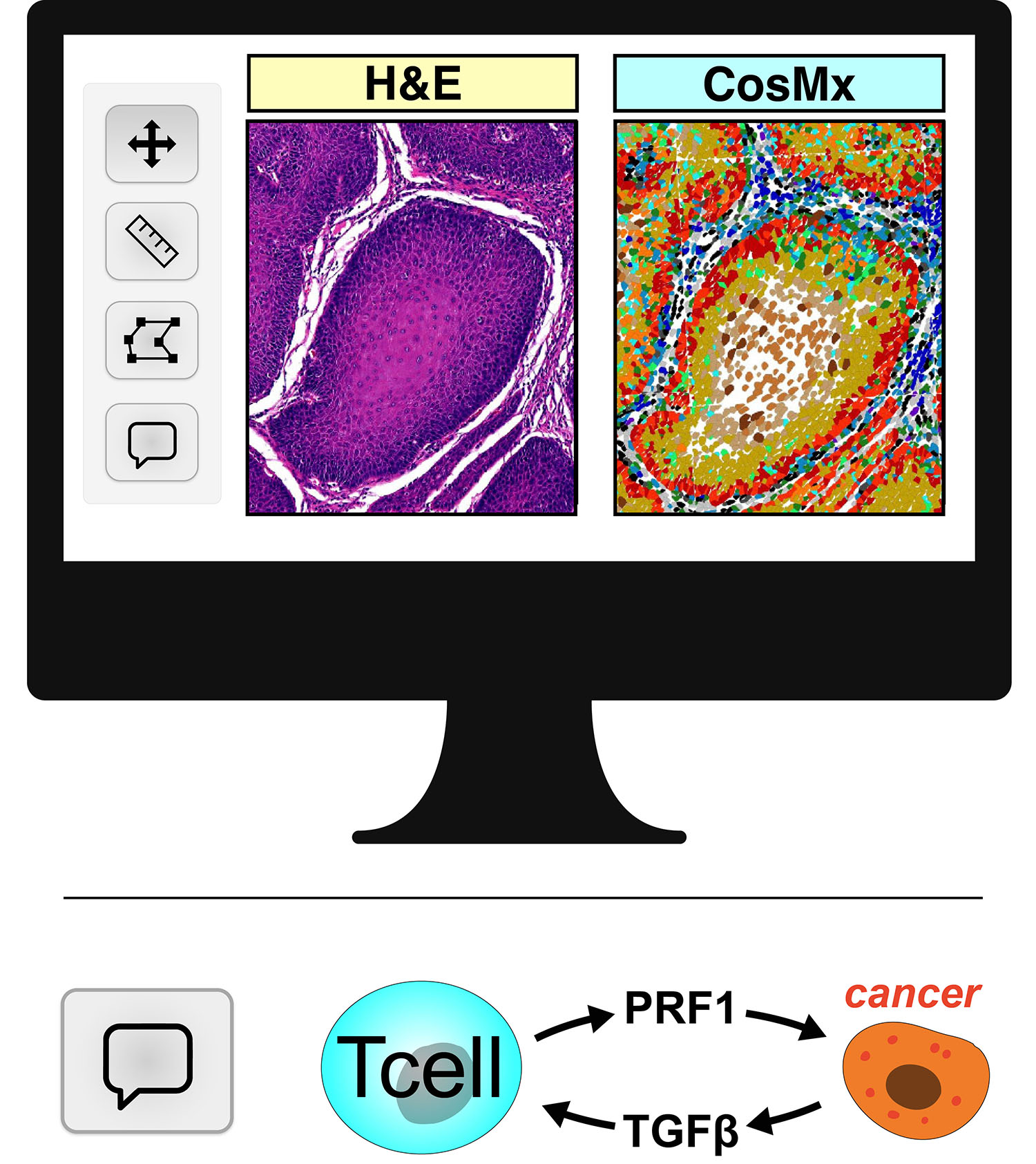
As shown in the figure to the right, tumor biopsies can now be explored more like Google Maps: researchers can zoom from the tissue level down to individual cells, identify cell types like landmarks on a map, and begin to understand how cancer cells, immune cells, and stromal cells are communicating with one another. This new capability is driven by spatial transcriptomic technologies being developed across the School of Medicine, College of Veterinary Medicine, and College of Pharmacy.
The AI Pathology Working Group brings this technology together with expertise from the Institute for Artificial Intelligence and the Institute of Bioinformatics. Our goal is to build multimodal, Google Maps-style web apps that allow pathologists and experimentalists to connect traditional H&E images with spatial molecular data, cell-type maps, and patient- or model-specific analysis. These tools are designed to make complex datasets easier to explore, interpret, and apply in real biomedical research.
Digital Biobanks and Multimodal Tissue Maps
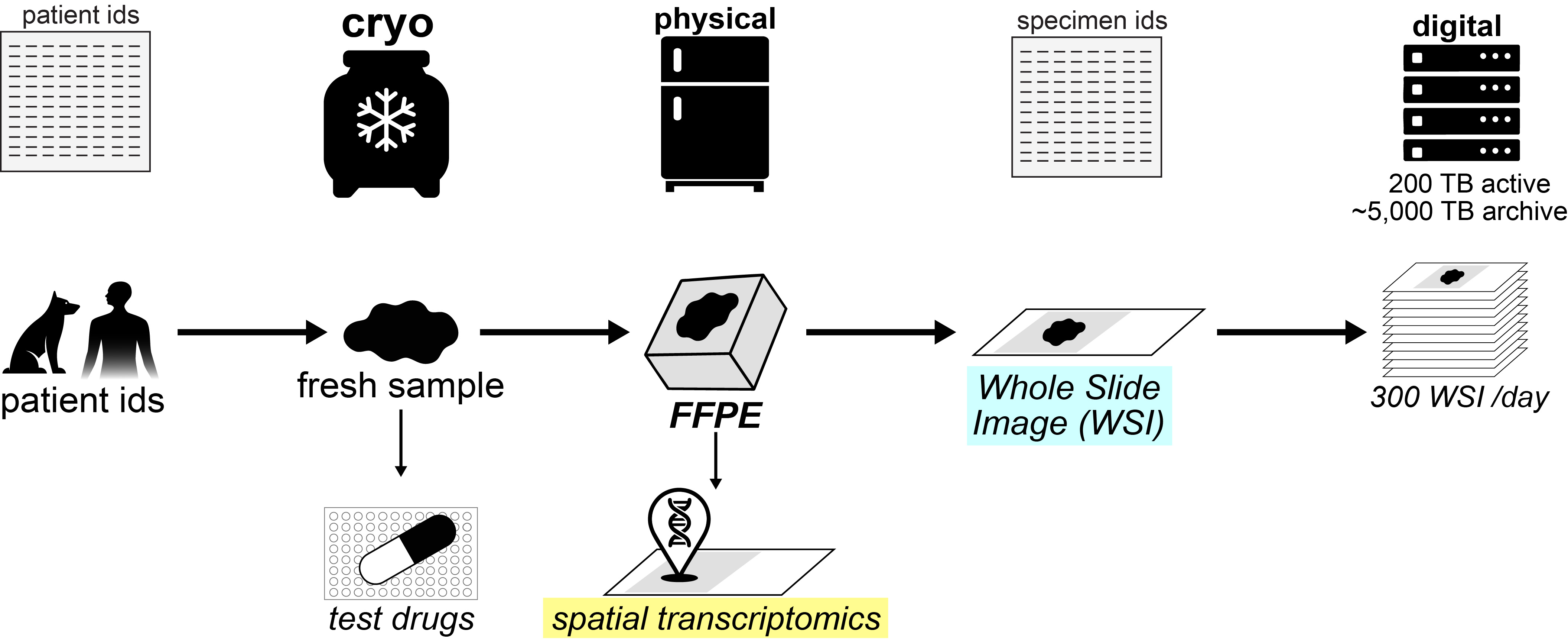
As shown in the summary graphic below, CVM and SOM are building the clinical biobank infrastructure needed to coordinate patient data, physical specimens for drug testing and histopathological analysis, WSI digital biobanks, and spatial transcriptomic atlases. This creates a linked pipeline from patient or model system to fresh sample, FFPE block, digital slide, molecular map, and analysis-ready dataset. The clinical and specimen infrastructure is anchored at CVM and SOM, while the digital infrastructure is being built with IAI and COP. Together, this creates a shared system where physical samples, image data, and molecular data can be connected in a patient- or model-specific way.
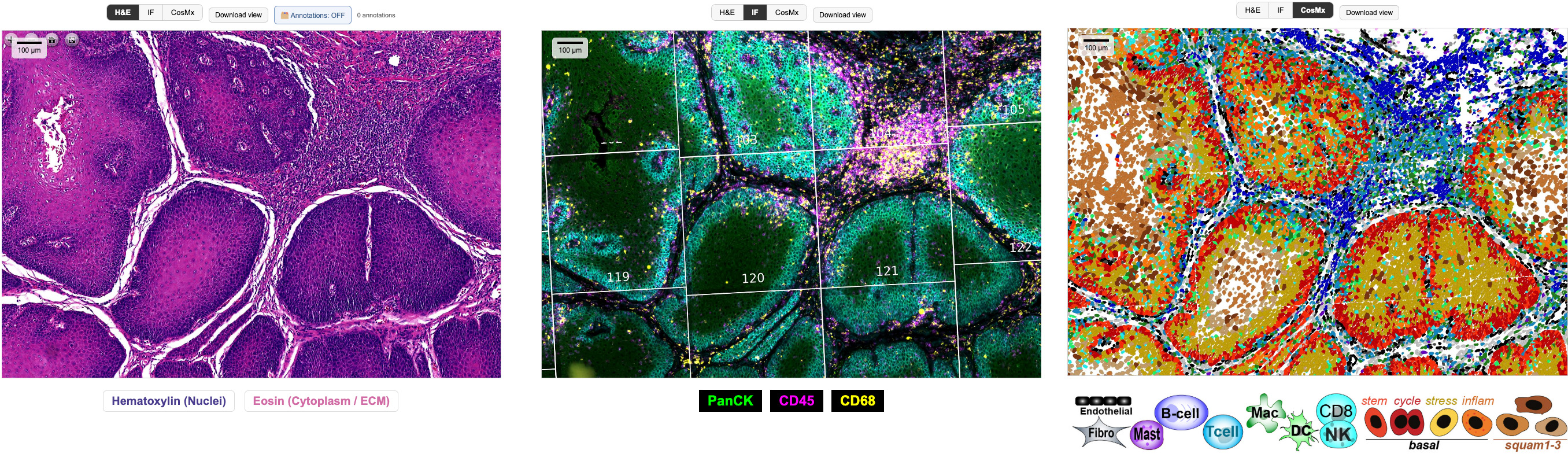
This app brings H&E, IF, and CosMx data from the same tongue-cancer specimen into one shared view. Users can move from tissue architecture to immune markers to single-cell spatial maps, allowing pathology and molecular biology to be interpreted together instead of in separate files. It illustrates the central goal of AI Pathology: making complex tissue data visible, navigable, and useful.
Current Members
- Eugene Douglass
- Suchendra Bhandarkar
- Lilian Oliveira
- Megan Corbett
- Yana Zavros
- Karin Allenspach
- Jessica Elbert
- Elizabeth Howerth
- Janet Grimes
Software Tools
…
- AI Prototype: Multi-modal AI Pathology
- Viewer Prototype: Multi-modal CosMx Viewer
…
Cleaned Datasets
…
…
Key Performance Indicators: specific items list
Protected Content
| KPI Category | KPI | Current Value |
|---|---|---|
| Research and Publications | Number of Published Papers | |
| Impact Factor of Journals | ||
| Citations | ||
| Conference Presentations | ||
| Collaboration and Engagement | Interdisciplinary Projects | |
| External Collaborations | ||
| Collaborative Publications | % | |
| Workshops and Seminars | ||
| Funding and Grants | Research Grants Received | $ |
| Grant Applications Submitted | ||
| Grant Success Rate | % | |
| Data and Tools | Datasets Published | |
| Software Tools Developed | ||
| Tool Adoption | downloads | |
| Training and Development | Students Supervised | |
| Training Programs | ||
| Skill Development | certificates | |
| Impact and Outreach | Societal Impact | |
| Media Mentions | ||
| Public Engagement | events | |
| Operational Efficiency | Project Completion Rate | |
| Data Management Practices | % compliance | |
| Resource Utilization | % efficiency | |
| Innovation and Excellence | Awards and Recognitions | |
| Innovative Solutions | breakthroughs | |
| Feedback and Improvement | Stakeholder Feedback | satisfaction |
| Continuous Improvement | # iterations |
- Research and Publications
- Number of Published Papers
- Impact Factor of Journals
- Citations
- Conference Presentations
- Collaboration and Engagement
- Interdisciplinary Projects
- External Collaborations
- Collaborative Publications
- Workshops and Seminars
- Funding and Grants
- Research Grants Received
- Grant Applications Submitted
- Grant Success Rate
- Data and Tools
- Datasets Published
- Software Tools Developed
- Tool Adoption
- Training and Development
- Students Supervised
- Training Programs
- Skill Development
- Impact and Outreach
- Societal Impact
- Media Mentions
- Public Engagement
- Operational Efficiency
- Project Completion Rate
- Data Management Practices
- Resource Utilization
- Innovation and Excellence
- Awards and Recognitions
- Innovative Solutions
- Feedback and Improvement
- Stakeholder Feedback
- Continuous Improvement
…
…
…
…