
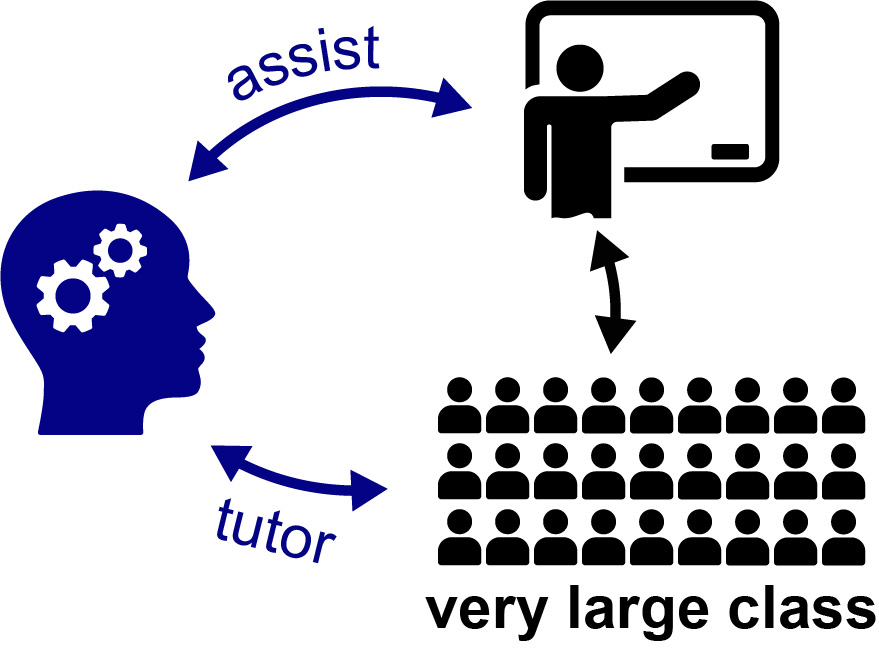
As shown in the figure, large professional-school courses often face a mismatch between student need and available expert support: many advanced topics are too specialized for traditional TA coverage, yet too large for instructors to tutor every student individually. The AI Teaching Agents Working Group brings together the College of Pharmacy, Institute for Artificial Intelligence, School of Medicine, and College of Veterinary Medicine to build digital TAs for this gap. These agents can house expert knowledge bases, including clinical guidelines, primary literature, and textbook content; assist students with complex applied tasks, such as working through patient electronic health records; and give instructors real-time feedback on where the class is struggling. We see this as a general solution for advanced, large-class coursework where qualified doctoral TA support is limited. Longer term, the same framework could develop into clinician-facing assistants that help doctors navigate and apply large clinical datasets.
From Patient Samples to Clinical Translation
As summarized in the figure below, this effort depends on both domain expertise and technical AI expertise. The clinical, veterinary, pharmacy, and teaching knowledge comes from the School of Medicine (SOM), College of Veterinary Medicine (CVM), College of Pharmacy (COP), and education partners shown in black. The technical infrastructure is driven by the Institute for Artificial Intelligence (IAI) and educational technology partners shown in blue. Together, these founding units provide the expertise needed to build AI teaching agents that are technically strong, clinically grounded, and useful in real classrooms.

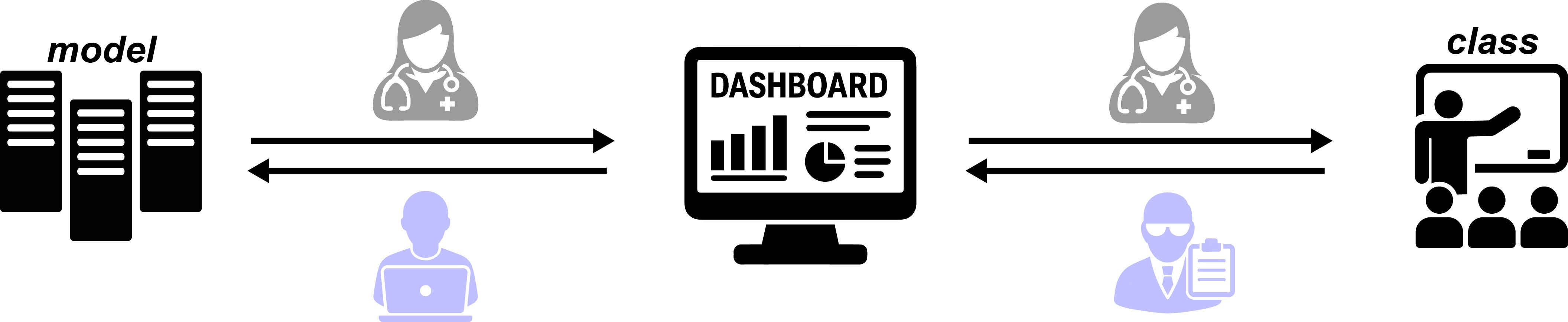
As illustrated in the figure below, product development depends on a tight loop between education PIs, computational PIs, and clinical PIs. Education PIs define the learning goals, classroom workflow, and instructor-facing dashboard needs. Clinical PIs provide the expert content, patient examples, and real-world decision logic that the agent must understand. Computational PIs build the model, interface, and data infrastructure that connect these pieces into a usable tool. The goal is not just to build an AI system, but to build one that fits the classroom, reflects expert practice, and improves through feedback from both instructors and students.
Current Members
- Devin Lavender
- Russ Palmer
- Katie Smith
- Jie Liu
- Eunice Kim
- Bryson Greenwood
- Robin Southwood
- Sarah Thompson
- Eunice Kim
- Timothy Brown
- Eugene Douglass
- Fred Maier
- Kimberly Van Orman
Key Performance Indicators: specific items list
Protected Content
| KPI Category | KPI | Current Value |
|---|---|---|
| Research and Publications | Number of Published Papers | |
| Impact Factor of Journals | ||
| Citations | ||
| Conference Presentations | ||
| Collaboration and Engagement | Interdisciplinary Projects | |
| External Collaborations | ||
| Collaborative Publications | % | |
| Workshops and Seminars | ||
| Funding and Grants | Research Grants Received | $ |
| Grant Applications Submitted | ||
| Grant Success Rate | % | |
| Data and Tools | Datasets Published | |
| Software Tools Developed | ||
| Tool Adoption | downloads | |
| Training and Development | Students Supervised | |
| Training Programs | ||
| Skill Development | certificates | |
| Impact and Outreach | Societal Impact | |
| Media Mentions | ||
| Public Engagement | events | |
| Operational Efficiency | Project Completion Rate | |
| Data Management Practices | % compliance | |
| Resource Utilization | % efficiency | |
| Innovation and Excellence | Awards and Recognitions | |
| Innovative Solutions | breakthroughs | |
| Feedback and Improvement | Stakeholder Feedback | satisfaction |
| Continuous Improvement | # iterations |
- Research and Publications
- Number of Published Papers
- Impact Factor of Journals
- Citations
- Conference Presentations
- Collaboration and Engagement
- Interdisciplinary Projects
- External Collaborations
- Collaborative Publications
- Workshops and Seminars
- Funding and Grants
- Research Grants Received
- Grant Applications Submitted
- Grant Success Rate
- Data and Tools
- Datasets Published
- Software Tools Developed
- Tool Adoption
- Training and Development
- Students Supervised
- Training Programs
- Skill Development
- Impact and Outreach
- Societal Impact
- Media Mentions
- Public Engagement
- Operational Efficiency
- Project Completion Rate
- Data Management Practices
- Resource Utilization
- Innovation and Excellence
- Awards and Recognitions
- Innovative Solutions
- Feedback and Improvement
- Stakeholder Feedback
- Continuous Improvement
…
…
…
…